

What to Know Before Traveling With a Mobility Scooter
Traveling with a mobility scooter opens up freedom and independence, but it requires extra planning. From airline rules and batteries to packing and on-the-ground logistics, a few practical steps will keep your trip smooth and stress-free.
This guide covers what to check before you leave, how to prepare your scooter and gear, and the on-the-road habits that make travel safer and easier. Use these tips to avoid surprises and focus on enjoying the trip.
Know Your Scooter: Specs, Weight, and Foldability
Start by knowing your scooter’s exact specifications: total weight, folded dimensions, removable battery type, and whether it’s advertised as airline-approved. If you’re still choosing a model for travel, consider a compact, travel-specific option like the Foldable Mobility Scooter for Adults, which lists folding dimensions and removable-battery features that matter at airports and on trains.
Airlines, Trains, and Public Transport Rules
Each carrier has different procedures for mobility devices. Most require early notification, documentation for lithium batteries, and sometimes demonstration that the device is in working order. Lightweight, airline-ready models such as the Paiseec L5 Mobility Scooter are often easier to check as gate-checked equipment or fit in cargo holds, but always confirm with the carrier in writing before you travel.
Battery and Charging: What to Carry and How to Store It
Batteries are the most regulated part of scooter travel. Airlines typically treat lithium batteries differently depending on whether they are removable and below certain watt-hour (Wh) limits. Carry documentation showing battery type and Wh rating. When transporting chargers and adapters, keep them organized and protected—use a sturdy solution like a dedicated Medical Travel Bags to keep cables, spare fuses, and paperwork accessible for security checks.
Packing, Storage, and Airport Handling
Plan how your scooter and accessories will be stowed. Use a protective cover to prevent scratches and moisture during handling and storage, and check whether your scooter needs to be partially disassembled (seat off, basket removed, tiller folded). For protection and organization, a travel bag designed for mobility devices like Wheelchair Travel Bags can help protect the frame and make gate handlers’ jobs easier.
When you’re not using the scooter, store chargers, tools, and small parts in a separate container. A Wheelchair Storage Bag is ideal for keeping spare parts, spare chargers, gloves, and paperwork together and anchored to the scooter or luggage.
Accessibility at Your Destination: Ramps, Curbs, and Hotel Rooms
Scout accessibility ahead of time. Airports, hotels, and attractions vary widely—some have seamless ramps, others rely on portable solutions. Carrying a compact threshold ramp can make a short curb or high threshold manageable; consider portable ramps such as the FACHNUO 2 Feet Portable Wheelchair Ramp for situations where a small step blocks access.
Ask hotels about room layout, bathroom grab bars, and turning radius before booking. If the property can’t accommodate you, request alternatives or look for properties that explicitly advertise mobility-friendly rooms.
On-the-Road Practical Tips: Maneuvering, Terrain, and Weather
Practice maneuvering your scooter in different settings before the trip. Tight corners, uneven sidewalks, wet surfaces, and gravel require different speeds and turning techniques. Pack a small accessory bag within reach to hold your phone, ID, and keys—useful options include the Vive XL Wheelchair Accessories Bag, which can hang securely and keep essentials dry and accessible.
Plan alternate routes where sidewalks are missing or ramps are steep. If weather is a concern, bring a scooter cover or rain protection to avoid water damage and slippery seats.
Maintenance, Spares, and Protection
Before departure, perform a basic maintenance check: tire pressure, brakes, lights, battery charge cycles, and connectors. Pack a small toolkit, spare fuse, and a compact cover to protect the scooter during storage—consider a durable Mobility Scooter Cover to guard against dust and rain when the scooter is parked outdoors or stored in cargo.
Know what shops or service centers are available at your destination in case you need repairs. Photograph your scooter’s serial and model numbers and keep digital copies of manuals and warranty info in cloud storage or on your phone.
Checklist: Must-Pack Items Before You Travel
- Chargers, adapters, and documentation for battery watt-hours and type
- Protective cover and a compact storage bag for parts
- Basic toolkit, spare fuse, and tire repair kit
- Travel-sized ramp or plan for local ramp access
- Accessible travel bag for medications and personal items
- Printed confirmation of airline/carrier accessibility arrangements
- Phone with emergency contacts and digital copies of scooter manuals
FAQ
Q: Do airlines allow mobility scooters in the cabin?
A: Most full-size scooters are gate-checked or placed in cargo. Small, airline-approved models may be permitted in the cabin on some carriers but confirm with the airline well in advance.
Q: How do I handle scooter batteries for flights?
A: Rules depend on battery chemistry and watt-hours. Removable lithium batteries often must travel in carry-on and may require airline approval and labeling. Keep documentation handy.
Q: Can I book accessible hotel rooms online?
A: Many booking sites filter by accessibility, but always call the hotel to verify room dimensions, door widths, and bathroom configuration before booking.
Q: What if my scooter is damaged during transport?
A: Note damage immediately with the carrier and file a damage report. Photograph the scooter and retain all receipts. Contact the scooter manufacturer or local service center for repair options.
Q: Should I bring a ramp?
A: Bringing a compact ramp can be lifesaving for thresholds and short steps. If you can’t carry one, research local suppliers or accessible attractions ahead of time.
Conclusion
Traveling with a mobility scooter is entirely feasible with the right preparation: know your scooter, plan for batteries and documentation, pack protection and spares, and confirm accessibility at every step. A few deliberate checks before you leave will save time and reduce stress—letting you focus on the trip, not the logistics.
Products Featured in This Article
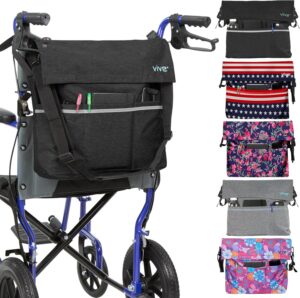
Vive XL Wheelchair Accessories Bag …
Product description The video showcases the product in use.The video guides you through product setup.The video…
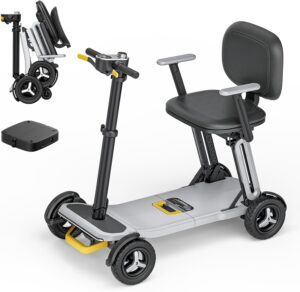
Paiseec L5 Mobility Scooter 32 lbs …
Product description $400 OFF L5 Dual Battery – 30 Miles, 32 lbs, 1‑Second Fold – Prime…

Foldable Mobility Scooter for Adult…
Product description 1 Airline Approved 2 Product Size 1 Spare Battery Slot 2 Charging Method 1…
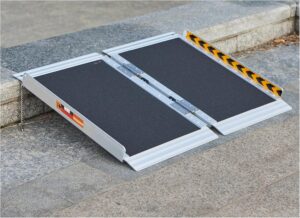
FACHNUO 2 Feet Portable Wheelchair …
Product description 1 High Quality Material 2 Stainless Latch 3 Bottom Protective Glue 4 Portable Handle…