

How to Make Airport Travel Easier With Mobility Challenges
Traveling through airports can be demanding even on a good day; when you have mobility challenges, it takes planning and the right gear to reduce stress and stay independent. This guide offers practical, reliable strategies to help you move through check-in, security, boarding, and arrival with fewer surprises.
Use these steps before you leave home and as quick routines at the airport. Small adjustments—booking the right assistance, packing thoughtfully, and using travel-friendly mobility products—make a big difference in comfort and control.
1. Plan ahead: call the airline and request assistance
Book early and call the airline at least 48 hours before departure to request wheelchair assistance, early boarding, or an aisle chair. Confirm pickup points at both origin and destination and ask about gate-to-plane transfer procedures so you’re not surprised at the airport. If you use an airline-provided wheelchair, know whether it will travel to the aircraft door or only to the gate.
2. Choose the right mobility device for travel
If you rely on a wheelchair, consider an airline-friendly model or one that’s designed for folding and compact storage. For a travel-specific option, check accommodations and specifications to ensure it meets airline handling rules and won’t be damaged during transit. Browse options labeled for travel to match your needs, like lightweight or foldable models to ease boarding and loading: FSA HSA Eligible Wheelchairs.
3. Protect and store your mobility equipment
Transporting a wheelchair or rollator safely reduces the risk of damage and lost parts. Use purpose-built travel bags and covers to protect wheels, electronics, and frames when checking devices or storing them in shuttle vehicles. A dedicated travel bag can make handling by airline staff cleaner and easier: Wheelchair Travel Bags.
4. Accessories that simplify airport life
Small accessories keep essentials within reach and prevent unnecessary bending or fumbling. A wheelchair accessories bag or organizer that attaches to the back or armrest holds your ID, boarding pass, phone, and charging cables. Look for waterproof, scratch-resistant, and machine-washable options that are easy to hang or remove at security: Vive XL Wheelchair Accessories Bag.
5. Consider storage solutions for checked equipment
If airlines require you to check a mobility device, use a dedicated storage bag or protective cover to prevent scratches and protect controls and footrests. Wheelchair-specific storage bags often have reinforced corners and grab handles to help airline staff load and unload without dropping or crushing components: Wheelchair Storage Bags.
6. Pack medications and medical supplies smartly
Keep medications, spare batteries, and chargers in your carry-on and in labeled organizers for easy screening and access during the flight. Use a compact organizer with separate compartments for pills and devices; this speeds security checks and keeps items protected during long layovers: FSA HSA Eligible Medication Organizers.
7. Reduce swelling and fatigue on long flights
Leg swelling and muscle fatigue are common during air travel. Wear graduated compression socks on flights longer than two hours to improve circulation and reduce discomfort. Choose medical-grade or travel-rated compression socks that are comfortable for sitting and compatible with shoes and boots: FSA HSA Eligible Compression Socks.
8. Choose compact mobility aids when possible
If you can use a cane, walker, or rollator only when needed, pick a travel-friendly model that folds or collapses for storage in overhead bins or shuttle trunks. Lightweight folding walkers and compact rollators allow you to move independently in terminals while still fitting in tight storage spaces: Affordable Folding Walkers.
9. Comfort on board
Save your seat comfort by bringing a travel pillow to support your neck and reduce strain when seated for long periods. Low-profile supportive travel pillows are allowed on planes and help you rest during layovers. A small cushion can also protect sensitive hips or tailbone areas: Affordable Travel Pillows.
Quick Checklist Before You Leave
- Confirm airline assistance and pickup locations 48+ hours before departure.
- Label and photograph mobility equipment and serial numbers.
- Pack medications and batteries in a carry-on and use a clear organizer.
- Bring compression socks and a travel pillow for in-flight comfort.
- Use protective or storage bags for wheelchairs or scooters.
- Have chargers, adapters, and a pen for forms ready in an easy-access pocket.
- Check TSA rules for medical devices and prepare documentation if needed.
FAQ
Q: How early should I arrive at the airport?
A: Arrive at least 90 minutes for domestic flights and 2–3 hours for international flights if you need assistance; this gives staff time to provide wheelchairs, arrange gate transfers, and handle checked mobility equipment.
Q: Can I take my mobility device through security?
A: Security screening varies. Battery-powered devices may need separate screening and battery removal; manual wheelchairs usually pass through X-ray except when shielding is required. Inform TSA officers and request private screening if needed.
Q: What if my device is damaged during travel?
A: Report damage immediately to airline baggage services and request a written damage report (PIR). Document the damage with photos. Follow the airline’s claims process and keep receipts for repairs if possible.
Q: Are compression socks necessary?
A: They’re not mandatory, but graduated compression socks are recommended for flights over two hours or if you have circulation concerns; they can reduce swelling and discomfort.
Q: Should I bring spare parts or tools?
A: Yes—small tools, extra tips for canes, spare cushions, and a lightweight repair kit (zip ties, Allen keys) can help with quick adjustments at the gate or during travel.
Conclusion: One small change at a time
Airport travel with mobility challenges becomes far more manageable by combining preparation, the right portable gear, and clear communication with airline staff. Start with one change—book assistance early, protect your device with a travel bag, or pack a medication organizer—and build a travel routine that keeps you comfortable and confident.
Products Featured in This Article
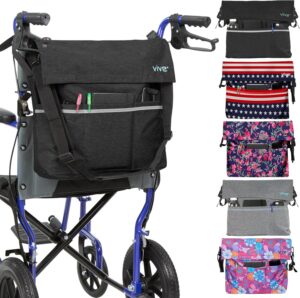
Vive XL Wheelchair Accessories Bag …
Product description The video showcases the product in use.The video guides you through product setup.The video…
💜 Travel Smarter Tip
The best trip isn't the one where everything goes perfectly—it's the one you planned well enough to enjoy despite the unexpected.
Travel Smarter. Move Easier. Explore with Confidence.
💜 Ready for Your Next Adventure?
Practical travel tips, helpful resources, and recommended gear for travelers with limited mobility.