
Airport Assistance Guide for Travelers With Limited Mobility
Travel can be empowering but also challenging when mobility is limited. This guide gives practical, step-by-step advice to help you move through airports with fewer surprises and more confidence.
Focus on planning, clear communication with airline and airport staff, and packing the right equipment. Below are targeted strategies and product recommendations you can use right away.
Pre-trip planning and airline policies
Start by calling your airline as soon as you book to confirm their disability assistance process, boarding procedures, and any documentation they require. Ask about early boarding, gate-to-aircraft wheelchair transfers, and whether attendants will push a wheelchair to the gate or if you’ll be carried on board.
If you use a mobility device that must be checked or stowed, consider reserving approved chairs or transport wheelchairs through stores or your airline. For options that are easier to check and more likely to meet airline specifications, look at FSA HSA Eligible Wheelchairs to compare lightweight and airline-friendly models before travel.
Curbside drop-off, arrival and priority parking
Use curbside drop-off or designated accessible parking to minimize walking distance. If someone is driving you, plan the logistics ahead—where they can wait, how to communicate at the curb, and how to transfer into a wheelchair or mobility aid quickly and safely.
If you bring your own wheelchair, keep it protected with a travel bag to reduce damage during handling and to speed up transfers. A dedicated Wheelchair Travel Bags makes curbside transitions and airline check-in smoother and protects sensitive components.
Check-in, documentation and security screening
At check-in, present any medical documentation requested by the airline and clearly label mobility equipment. Request a gate-check tag if you’ll be using a wheelchair up to the gate. Keep a small, easy-access bag with essential medications and paperwork with you—never pack these in checked luggage.
Organize medication and supplies in purpose-built bags to reduce delays at security and to make it easier to find what you need during the trip. A compact Medical Travel Bags can hold prescriptions, spare syringes, oxygen paperwork, or insulin and keep everything visible and accessible at checkpoints.
Requesting mobility assistance and moving through the terminal
When you request assistance at check-in, specify whether you need an aisle-to-seat transfer, escort to the gate, or a wheelchair that stays with you until boarding. Ask for the on-the-day contact procedure: will staff meet you at the ticket counter, curb, or a specific terminal entrance?
If you use a walker or rollator and want to use it until the gate, make that clear. Airports often offer storage and return at destination; comparing options helps you decide whether to check or gate-check. For those who prefer a compact wheeled aid at the airport, research FSA HSA Eligible Rollators that fold and can be gate-checked efficiently.
Choosing and packing mobility equipment
Decide what comes on-board with you and what will be gate-checked. Essentials to keep with you: medications, phone, ID, boarding pass, and any medical devices you must monitor. Items that are bulky but nonessential in flight can be gate-checked.
Medication organization reduces stress. Use a reliable Pill Organizer Bags to separate doses by day and time, include spare doses, and keep a printed list of medications and dosages in the same bag.
Onboard seating, transfers and comfort
Request bulkhead or aisle seats if you need space for transfers or to stand briefly. Confirm boarding priority with the airline so you have extra time and support to stow personal items and take your seat comfortably.
Long flights and narrow seats can be painful after limited mobility. Bring a supportive cushion to reduce pressure and protect sensitive areas during taxi, takeoff, and landing. Consider an extra-large cushion tailored for extended sitting like the Extra Large Seat Cushion for Sciatica for better comfort on flights.
Managing health during long waits and layovers
Layovers can be the hardest part—plan for movement, rest, and hydration. Walk or do seated leg exercises when able to reduce stiffness and lower DVT risk. Wear compression socks if recommended by your healthcare provider and suitable for your condition.
A travel-friendly pair of compression socks can make long waits more comfortable; check options like FSA HSA Eligible Compression Socks to see various strengths and fits that may be allowed under FSA/HSA plans.
Traveling with a companion and communication tips
If you travel with a companion, discuss roles in advance: who handles check-in, who manages medications, and how you’ll communicate at noisy gates. Use a clear, short script to explain needs to airline staff and TSA agents—this reduces misunderstandings and speeds assistance.
Store accessories like extra batteries, chargers, or small repair tools in a dedicated bag that stays with the chair or companion. The Vive XL Wheelchair Accessories Bag is a practical option to keep straps, remotes, and small essentials organized and accessible.
Quick checklist before you leave home
- Confirm airline assistance and note required documentation.
- Label mobility devices and pack chargers and spare parts.
- Pack medications in a carry-on and use a pill organizer bag.
- Reserve priority or early boarding if needed.
- Bring a travel cushion or support seat for long flights.
- Wear recommended compression socks for long trips.
- Keep contact info for your companion and airline handy.
FAQ
- Q: How early should I arrive at the airport?
A: Arrive at least 90–120 minutes for domestic flights and 2–3 hours for international to allow extra time for assistance and security checks. - Q: Can I keep my wheelchair until I board the plane?
A: Most airlines allow gate-checking of wheelchairs; request this at check-in and confirm the process for retrieval at your arrival gate. - Q: What if TSA needs to screen my mobility device?
A: Airport security may screen wheelchairs and mobility scooters. Ask for private screening if you prefer, and carry documentation for batteries or medical devices. - Q: Are compression socks necessary for travel?
A: Compression socks can help reduce swelling and circulation issues on long trips; check with your healthcare provider for personalized advice. - Q: How should I pack medication that needs refrigeration?
A: Coordinate with airline and airport medical services—bring insulated medical travel bags and a printed note from your provider if necessary.
Conclusion
Good planning, clear communication, and the right gear make airport travel smoother for people with limited mobility. Use the checklist, confirm assistance in advance, and pack essentials in accessible bags so you stay independent and comfortable throughout your journey.
Products Featured in This Article
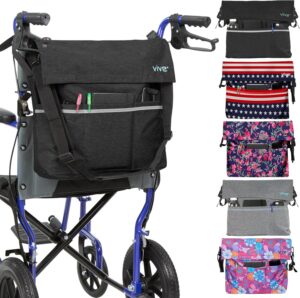
Vive XL Wheelchair Accessories Bag …
Product description The video showcases the product in use.The video guides you through product setup.The video…

Extra Large Seat Cushion for Sciati…
Product description Designed for Sciatica. Engineered for 10-Hr Relief 15.8% Wider. 100% Inclusive 19.69″ wide (15.8%…
